

TIDBITS for Winter 2012
U.S. Senator Tom Coburn released a new oversight report called "Wastebook 2011" that highlights over $6.5 billion in examples of some of the most egregious ways your taxpayer dollars were wasted. The report details 100 of the countless unnecessary, duplicative and low-priority projects spread throughout the federal government. Dr. Coburn said, "Video games, robot dragons, Christmas trees, and magic museums. This is not a Christmas wish list, these are just some of the ways the federal government spent your tax dollars. Over the past 12 months, politicians argued, debated and lamented about how to reign in the federal government's out of control spending. All the while, Washington was on a shopping binge, spending money we do not have on things we do not absolutely need. Instead of cutting wasteful spending, nearly $2.5 billion was added each day in 2011 to our national debt, which now exceeds $15 trillion." The report is available online at Sen. Coburn's U.S. Senate website.
BALANCED BUDGET AMENDMENT FAILS
On December 14, two Balanced Budget Amendments were rejected by the U.S. Senate. One proposal was offered by the Republicans and another proposal by the Democrats. The Republican measure was defeated by a vote of 47-53, and the Democrat proposal fell by a vote of 21-79. Senate Joint Resolution 10, the Republican proposed Balanced Budget Amendment to the U.S. Constitution, had the support of all 47 Senate Republicans including Oklahoma Senators Jim Inhofe and Tom Coburn. The Balanced Budget Amendment backed by the GOP would require the President to submit, and Congress to pass, a balanced budget every year. The amendment also included provisions to prevent the federal government from growing unnecessarily by capping spending at 18 percent of Gross Domestic Product (GDP) and by prohibiting deficit spending, spending above the constitutional cap, and increasing taxes. In comparison, the Senate Democrat proposal, Senate Joint Resolution 24, also required a balanced budget submission, but it allowed unlimited deficit spending whenever a 3/5 majority of Congress voted to allow it.
"Senate Democrats once again have stood in the way of enacting a constitutional mandate for fiscal responsibility," said Inhofe."Their refusal to pass a strong Balanced Budget Amendment highlights their reckless tax-and-spend philosophy. This approach not only threatens our economy but the future of our country. We are in grave danger of following the path of European countries like Greece and Italy that are currently facing an economic crisis because of their fiscal irresponsibility. We desperately need fiscal sanity in Washington and the Balanced Budget Amendment is the only way to permanently achieve that," Inhofe said. The Republican proposed Balanced Budget Amendment would ease spending and deficit restrictions during times of declared war and authorized military operations, but the amendment requires that these exceptions be both limited and fully specified.
FREEDOM INDEX
John Sullivan and James Lankford had the highest scores in the Oklahoma congressional delegation on the Freedom Index of the New American magazine, both scoring 80% in its latest rankings. The criteria used by the Freedom Index is "adherence to constitutional principles of limited government, fiscal responsibility, national sovereignty, and a traditional foreign policy of avoiding foreign entanglements." It is considered the "toughest" of the various conservative ratings. Frank Lucas and Tom Cole were next in the House, rated at 60%. Dan Boren, the lone Democrat in the delegation, brought up the rear with a 50% score. On the Senate side, Tom Coburn had a score of 75%, while Jim Inhofe rated 70%.
To compare with some other well-know members of Congress, Texas Congressman Ron Paul scored 100%, Michelle Bachmann of Minnesota missed too many votes to be rated, but has an 86% cumulative score, and Sen. Rand Paul of Kentucky had a 90% rating. John Kerry of Massachusetts managed to make a score of 20%, the same as Chuck Schumer of New York.
PRESIDENTIAL ABUSE OF POWER
Oklahoma Congressman James Lankford expressed grave concern over the current path President Obama has taken by engaging in a new form of executive appointments without Constitutional precedent. In a Chicago-style political move circumventing Congressional oversight and approval, on January 4 Obama announced Richard Cordray as head of the Consumer Financial Protection Bureau (CFPB). He also appointed Sharon Block, Terence Flynn and Richard Griffin to the National Labor Relations Board (NLRB). President Obama declared the appointments to be "recess appointments" which do not require Senate confirmation. Such appointments are only allowed when Congress is in recess. While President Obama decided that Congress was in recess, Congress had not voted to go into recess. "Senator Obama would have never agreed to such an egregious abuse of power by the Executive Branch, but he is exercising unprecedented and unrestrained authority to do so as President Obama," continued Congressman Lankford.
President Obama appointed Richard Cordray to head the new CFPB. As an unaccountable agency, the nearly-autonomous CFPB is a drastic expansion of federal government power, potentially imposing burdensome and onerous requirements on an already over-regulated financial system. "These unprecedented appointments have far exceeded the limits of presidential power," said Congressman Lankford. "Last year, the Senate demonstrated opposition to appoint Richard Cordray to the CFPB. To knowingly circumvent Congress in the final approval process is likely unconstitutional and politically irresponsible. This "agency' and its new director are accountable to no one but the President himself. The President is pushing the limits of the Constitution with his blatant power grab over the financial sector of our economy."
The President also announced three new appointments to the NLRB, effectively stacking the panel with Obama union backers. "The NLRB's power-grab to block Boeing from relocating to South Carolina and the reversal of that decision last year has already shown questionable judgment in their decision-making process," said Congressman Lankford. "We cannot allow President Obama to blatantly disregard the constitutional advise and consent authority to stack the board with his labor cronies, when the agency has already fallen off the tracks."
"ATTACK" ON RURAL AMERICAN FARMS
In a letter to U.S. Secretary of Labor Hilda Solis, Oklahoma Labor Commissioner Mark Costello voiced opposition to rules the U.S. Department of Labor is proposing to the Fair Labor Standards Act regarding child farm workers. Costello charged that the proposed rules are a "frontal attack on the rural family, farm life, and the family farm or ranch as a small business operation." The U.S. Department of Labor proposes that the family farm or ranch, when its legal structure is a partnership or corporation, is not allowed to employ children, 16 years of age or younger, in farm work deemed hazardous. Costello asserts under the new rules "young teens are barred from riding on a tractor, herding and branding cattle, and grandparents are barred from having their grandchildren work on the family farm. I would much rather defer to the authority of a parent to manage the safety of their child than a distant bureaucrat."
Costello asserted, "This proposed regulation is suspect, in particularly, originating from an administration headed by someone who has spoken derisively of rural Americans who "cling to guns or religion.' This absurdity will destroy agricultural jobs, hurt American agricultural competitiveness, and damage the cultural integrity of the rural family. This bureaucratic overreach tangibly demonstrates a lack of private sector agriculture experience and would criminalize traditional family farm life." Costello urged Secretary of Labor Solis to stand down from enacting "flawed nanny state rules."
FEDERAL GOVERNMENT OVERREACH
State Rep. Randy Terrill (R-Moore) said federal efforts to force states to ban all forms of talking and texting while driving, regardless of circumstances, disrespects the ability of citizens to govern themselves. Terrill's comments came in response to reports in December that the National Transportation Safety Board is attempting to coerce all states into imposing total bans on texting, emailing or chatting while driving. "The U.S. Constitution makes clear that the federal government has specifically enumerated and limited powers with all other issues relegated to state governments," said Terrill,. "If this talking and texting initiative stands, then is there anything out of bounds for the federal government?"
"States certainly have the power to take up this issue and enforce those laws within their borders," Terrill said. "However, the federal government's recent efforts to bully, harass, intimidate and threaten states into taking particular actions must stop." According to the Associated Press, 35 states and the District of Columbia already ban texting while driving, and another nine states ban hand-held cell phone use. In addition, 30 states ban all cell phone use for beginning drivers."Clearly, this issue is not being ignored by state lawmakers, and it obviously is not a proper function of the federal government, so I have to ask why the current federal administration would prioritize texting bans over its actual duties, such as national security," said Terrill.
It is believed the National Transportation Safety Board's recommendations could ultimately be imposed by withholding federal road funds from states that do not comply with the federal edict. Terrill noted the proposed talking-and-texting ban follows passage of the deeply unpopular federal health care law, which independent studies have shown will increase consumer costs and reduce access to quality health care. "In my adult lifetime, I have never seen the federal government overreach to the extent we are seeing today," Terrill said. "From the passage of ObamaCare, to the federal government suing states that enforce federal immigration laws within their borders, to this national talking and texting ban, it seems there's no area of our lives that the federal government is not trying to control -- all at the expense of our personal freedom and liberty as well as states' rights."
EARLY CHILDHOOD EDUCATION
Oklahoma ranks first in the nation, according to the National Institute for Early Education Research (NIEER), for access to government preschool. Ninety-eight percent of the state's school districts offer preschool, with 70 percent of 4-year-olds participating. State education leaders hoped that number one ranking would help Oklahoma win a $60 million Race to the Top Early Learning Challenge grant. But, the state came away empty handed when the U.S. Department of Education announced the winners on December 16. State Superintendent Janet Barresi and Gov. Mary Fallin issued statements expressing disappointment at loss of the grant. Only nine of 37 states that applied were successful. California, Delaware, Maryland, Massachusetts, Minnesota, North Carolina, Ohio, Rhode Island and Washington will share in the nearly $500 million grant program. Some have noted that all of the winning states voted for Obama in 2008.
Critics of early childhood education programs charge that such programs are nothing more than "free" daycare for working parents. They say that studies show that any educational advances for the children dissipate by fourth grade. And, it is said that universal preschool is second only to universal healthcare on the liberal agenda. Some conservatives had in fact express concern that the state had applied for the grant. So, perhaps Barresi and Fallin should not be so disappointed.
OKLAHOMA PAUL CAMPAIGN
Ron Paul OK, the grassroots-based organizing effort for Ron Paul in the Republican presidential nomination race, announced January 18th that organizers met and chose their leadership for the Oklahoma state level campaign. Lukus Collins was chosen to be the Director of Operations for Ron Paul OK, and as such will also serve as Spokesperson for the group's efforts. Collins served as an Alternate Delegate to the 2008 Republican National Convention, holds a position as a Co-Organizer of the OKC Ron Paul 2012 Meetup group, and is the founder of the RonPaulOK.com website and blog.
Organizers also chose State Rep. Charles Key and former State Senator Randy Brogdon to serve as Co-Chairmen for the grassroots campaign in Oklahoma. Key and Brogdon gained national notoriety in 2009 when they joined forces to author and pass HJR 1003/SJR 10, which called upon the federal government to restrict itself to Constitutional limitations and cease infringing on states' Tenth Amendment rights.
As a longtime advocate of the principles of liberty espoused by Congressman Paul, Rep. Charles Key said, "Dr. Paul has led a tireless fight against big government for nearly three decades, and has proven himself as the only presidential candidate with the conviction to back up his rhetoric with real action." Two-term State Senator and 2010 Republican Gubernatorial Candidate Randy Brogdon said, "I am inspired by Ron Paul and his dedication to securing the blessings of liberty, which are at risk today in our country. We need Ron Paul because he understands that our security as a nation can only be protected through the principles of liberty as laid out in our Declaration of Independence and protected by our Constitution."
SEN. LASTER NOT RUNNING
State Sen. Charlie Laster (D-Shawnee) announced in December that he will not to seek another term in the Oklahoma State Senate. Although the Shawnee Democrat would not have been term limited until 2016, Laster said it was time to refocus his attention on his family and his legal career. Laster, 57, also acknowledged that redistricting, which made the district less secure for the Democrats, was one of the factors in the decision. Laster first came to the Senate in 2003 in a special election after Brad Henry was elected governor with two years remaining in his term. Laster was elected to his first full term in 2004 and was reelected in 2008. He served in key leadership positions, including Senate Democratic Leader, Co-Floor Leader of the Senate and Judiciary chair. Laster has a law practice in Shawnee. Since Laster still had four years remaining before being term-limited, he could seek office again. "I enjoyed the Senate so much, at some point on down the road I may just decide to come back for my final four years. You never know." The open seat is expected to attract serious candidates from both Democrats and Republicans.
SHARP ANNOUNCES CANDIDACY
On January 3, Longtime educator Ron Sharp formally announced that he will seek the Republican nomination for the Shawnee-based state Senate District 17 seat. Sharp, 59, is a lifelong resident of Shawnee. Although incumbent state Sen. Charles Laster just announced that he would not seek re-election, Sharp had been gauging support for his candidacy for several months. Senate District 17 includes a portion of Pottawatomie County which includes all of Shawnee and McLoud as well as part of Oklahoma County which includes Harrah, Choctaw, Jones and Luther.
"During my decades as an educator, I have had the honor of teaching hundreds of young people about our government and representative democracy," said Sharp, who is in his 38th year with the Shawnee Public Schools and has served the last 12 as an AP Government and American History instructor. During his career, Sharp also served as head coach of the Shawnee High boys and girls tennis teams, helping win five state boys' championships and one state girls' championship.
"Oklahoma is a great state, but I believe we can make it better by enacting free-market policies that reduce taxes and burdensome regulation, allowing businesses to thrive and create jobs," Sharp said. Sharp is active in his home church, Liberty Baptist, and is strongly pro-life, believing that society must defend the right to life from the womb to the grave. He is a long-time member of the NRA and the Sons of the American Revolution.
GANTZ ANNOUNCES FOR STATE HOUSE
In a crowded aircraft hangar at Jones Airport, Darren Gantz announced his bid to run for Oklahoma House District 68, which covers portions of Western Tulsa County. "It's time we have a Republican state legislator who will actually fight for Republican values," said Gantz, "not someone who fights to implement Obamacare every chance he gets." Gantz then explained that current GOP State Representative Glen Mulready (R-Tulsa) has worked to implement a key provision of Obamacare known as Health Exchanges. "Despite the fact that an overwhelming majority of Oklahomans don't want any part of Obamacare, Glen Mulready refuses to listen to his constituents and instead pushes Health Exchanges because his former employer and major donor, Blue Cross Blue Shield, stands to make billions pushing Obamacare down Oklahoma's throat." Rep. Mulready has a 70% score on the Oklahoma Conservative Index. Gantz pledged to fight for lower taxes for all Oklahomans, including the elimination of the Oklahoma income tax, and fight for family values at the State Capitol. Gantz is a 5th generation Oklahoman. He is an independent insurance agent owning his own business for the past 13 years. He and his wife of 17 years, Melissa, live with their son, Alex, in Jenks.
DEATH OF SEN. MYERS
Sen. David Myers (R-Ponca City) died November 11 after battling pneumonia. Sen. Myers,73, had a cumulative average score of 63% on the Oklahoma Conservative Index. Myers was first elected to the Senate in 2002 and was the Senate Appropriations Chairman. In addition to his nine years of service in the Oklahoma State Senate, David Myers was a family man of many accomplishments. A chemical engineering graduate of Oklahoma State University, Myers had a successful career as an executive with ConocoPhillips in Ponca City, retiring after 33 years and then becoming a consultant in the oil industry. Myers was also a pilot and was an antique car enthusiast, rebuilding many classic models which he drove in local parades in his district. He also loved working on his farm.
Since Myers was term-limited and could not have run for reelection when his term expired in 2014, it became one of the districts selected to be relocated during redistricting. The new Senate District 20 covers Logan, Noble and Pawnee counties and parts of Kingfisher County. It used to cover Grant and Kay counties, and parts of Alfalfa, Garfield and Woods counties. The governor set the Special Primary Election for February 14 and the Special General Election for April 3.
SENATE APPROPRIATIONS COMMITTEE
President Pro Tempore Brian Bingman (R-Sapulpa) appointed Sen. Clark Jolley (R-Edmond) Chairman of the Senate Appropriations Committee. Jolley previously served as the committee's Vice Chairman, and assumes the Chairmanship previously held by the late Sen. David Myers. "As Chairman of the Senate Appropriations Committee, David Myers led with a steady hand during challenging times," Bingman said. "Senator Jolley was an exceptional Vice Chairman, and his expertise on the committee is an invaluable asset in this time of transition. I am confident he will lead an Appropriations Committee that reflects our core belief in smaller, simpler, and smarter government."
In 2011, the Senate Appropriations Committee oversaw appropriations to seventy-eight state agencies totaling more than $6.5 billion. As Chairman of the Senate Appropriations Committee, Jolley will serve as the Senate's chief negotiator in budget discussions with the Governor and the House of Representatives. "I couldn't have had a better mentor in the appropriations process than my friend Senator Myers," Jolley said. "While no one can replace David, I am firmly committed to leading the Appropriations Committee with the kind of integrity and honesty he displayed day in and day out. The business of the Appropriations Committee is essential to the operation of state government, and there is simply no trust more sacred than ensuring our tax-payer dollars are spent judiciously and wisely. I look forward to the next legislative session, and I am honored by the trust President Pro Tempore."
SENATE DEMOCRATIC FLOOR LEADER
State Sen. Sean Burrage (D-Claremore) is the new Senate Democratic Floor Leader. Members of the Senate Democratic caucus selected Burrage to follow Sen. Andrew Rice (D-Oklahoma City) in the leadership post. Rice announced he was moving out of state and would resign from the Senate effective January 15. Burrage said he was honored to lead the Senate Democrats in 2012. "I believe we must always be focused on what's good for our state-not what's going to score the most political points. We want a stronger economy and top-paying jobs for our citizens. We want our children to have the best educational opportunities possible and we want to be safe when we are at school, work or at home. We want roads and bridges that are modern and safe as well. When we can agree on how to achieve those things, then those are programs we'll support," Burrage said. "But if proposed legislation comes at the expense of our most vulnerable citizens, then we'll be fighting to give those individuals a voice in the Senate." Burrage, an attorney and father of two, was reelected without opposition to a second term in the Senate in 2010. He previously served as Assistant Democratic Floor Leader in the Senate. Sen. Burrage has a 32% score on the Oklahoma Conservative Index.
NEW HOUSE LEADERS
State Rep. Dale DeWitt (R-Braman) was named the next Majority Floor Leader of the Oklahoma House of Representatives. House Speaker Kris Steele named DeWitt to the position to replace outgoing Floor Leader Dan Sullivan (R-Tulsa) who resigned to become the chief executive officer (CEO) of the Grand River Dam Authority (GRDA). As Floor Leader, DeWitt will be responsible for assigning bills to committees, scheduling bills for floor hearings and running business on the floor during session. In addition to serving as Floor Leader, DeWitt will maintain his current membership on House committees. The responsibilities of the position of Majority Leader, which DeWitt previously held, will be distributed among other House leadership positions. DeWitt scored 56% on the Oklahoma Conservative Index Rep. Harold Wright (R-Weatherford), was named Deputy Floor Leader. As Deputy Floor Leader, Wright will assist with the duties of the Floor Leader's office. Wright has a 60% conservative rating. Rep. Jason Nelson (R-Oklahoma City) was named chairman of the House Appropriations Subcommittee on Human Services. Nelson has been leading the bipartisan group of House members that is reviewing the Department of Human Services. Nelson has a 70% conservative rating. Rep. Ron Peters (R-Tulsa) was moved to the chairman position for the House Committee on Energy and Utility Regulation. Peters has 59% conservative rating.
BAN LAWMAKERS FROM STATE JOBS
State Rep. Mike Reynolds (R-Oklahoma City) has filed legislation to eliminate loopholes that allow state lawmakers to accept high-paying state jobs after leaving the Oklahoma Legislature. House Bill 2194 would make it illegal for any Oklahoma lawmaker to take a state government job that pays more than the base legislative salary. The ban would be in place for two years after a legislator steps down from his elective position. "If lawmakers can be good public servants while earning $38,000 in the Oklahoma Legislature, they should be able to do the same thing at the same salary if they want to continue working in state government," said Reynolds,. "Most importantly, this legislation will end the perception that some legislators have used their political connections to feather their nest with cushy government jobs after they leave elective office."
Although there is currently a ban on lawmakers taking state jobs for two years after the end of their terms in office, that ban applies only to positions funded directly by legislative appropriations. That loophole has allowed lawmakers to accept jobs paid with federal dollars or fee revenue that is not appropriated. "I think Oklahoma citizens have made it clear that they do not want legislators to work in state government immediately following the end of their terms in office to reduce the chance of someone selling votes for a job," Reynolds said. "By ensuring lawmakers can only take positions paying the same as the base legislative salary, we can end the perception of corruption that troubles so many Oklahoma citizens."
LEGISLATURE BILL-FILING COMPLETE
January 19 was the last day to file bills for the 2012 Oklahoma legislative session. At the conclusion of the filing, there were 962 bills and 26 joint resolutions filed in the Oklahoma House of Representatives. Last year, the House Chief Clerk's Office reported that 1,168 bills and 41 joint resolutions were filed in the House. Meanwhile, in the Oklahoma Senate, a total of 972 bills and 45 joint resolutions were filed with 753 Senate Bills and 41 Senate Joint Resolutions carried over from the 2011 session. Under Senate rules, appropriations bills are not subject to the deadlines pertaining to substantive (policy) bills. Last year, 976 substantive bills and 45 joint resolutions were filed by the 2011 deadline.
REDISTRICTING PETITION FAILS
After losing three court battles, State Sen. Jim Wilson (D-Tahlequah) tried to overturn the Oklahoma Senate redistricting plan with an initiative petition to place his proposal on the 2012 general election ballot. If successful, the measure would have required lawmakers to draw new maps in time for the 2014 elections. But, by the petition deadline at end of December, Wilson said he had only obtained about 20,000 signatures. He needed 83,000 signatures.
Senate Bill 821, the bipartisan Senate redistricting plan, was approved by a vote of 38-6 in the Senate with eight Democrats voting in favor of the proposal. Wilson challenged the plan in court last July, but the Oklahoma Supreme Court ruled the plan was constitutional. The court later denied his request for a rehearing, and in October an Oklahoma County Judge dismissed his second lawsuit. Wilson is still appealing the dismissal to the state Supreme Court and is seeking a court order to ban enforcement of the Senate redistricting plan.
NEWSPAPER SALES TAX
In an effort to fund the estimated $17 million backlog owed to Oklahoma's Nationally Board Certified teachers, Sen. Jim Wilson (D-Tahlequah) wants to repeal the sales tax exemption for newspapers and periodicals. Senate Bill 1098, would collect around $17 million in additional revenue according to the Oklahoma Tax Commission, which Wilson says could be used to pay back the state's most qualified teachers. "The State made an agreement to pay teachers $5,000 per year if they became Nationally Board Certified. There is an exception in the law allowing the State to renege on its commitment if money is not available, but that agreement is a contract and should be paid back eventually," said Wilson. "We need to get our priorities straight. I believe it's much more important to keep our promises to these educators than to provide sales tax exemptions for newspapers." Wilson's bill would require people to pay sales taxes for purchasing newspapers and periodicals. "It's much too easy to avoid commitments by claiming lack of money, but I've found a funding source that will help fully reimburse these teachers and I hope my colleagues will support my bill."
TAX CREDIT REFORM
On December 21, members of the Task Force on State Tax Credits and Economic Incentives voted to require greater tax-credit transparency and mandatory pre-approval for those seeking tax credits. Those recommendations, along with several other reforms endorsed at previous meetings, will now be presented to the governor and legislative leaders. "There is a general consensus here that says tax incentives that create real, lasting jobs are worthy, while those that fail that basic test are not," said state Rep. David Dank (R-Oklahoma City) who chairs the task force. In calling for greater transparency, Dank noted that it had become clear that until recently "few members of the Legislature had even the dimmest concept of how many tax credits we had on the books, how much they cost or even where they were going. The taxpayers certainly didn't either." In calling for a pre-approval process, Dank noted that the current system for obtaining many tax credits seems "to be almost automatic" with no future cross-checking for re-approval process for recipients.
The group has previously endorsed elimination of transferable tax credits and called for mandatory fiscal impact reports on all tax credits, caps on tax credits, annual audits of tax credit programs, routine analysis of each credit's effectiveness at permanent job creation, and expiration dates for all tax credit programs with the option for legislative re-authorization. The group also endorsed a prohibition on hearing tax-credit bills during the final hectic days of the legislative session. The Task Force on State Tax Credits and Economic Incentives' final report was submitted to legislative leaders and Gov. Mary Fallin in December. The report will be used to craft legislation for the 2012 legislative session.
STATE SPENDING GROWTH
After reviewing the newly released FY-2011 Oklahoma Comprehensive Annual Financial Report (CAFR), an analyst at the Oklahoma Council of Public Affairs (OCPA), the state's leading free-market think tank, is concerned that state government spending continues to climb."There's no denying the state's budget crisis is real: the crisis is that government spending is at an all-time high," said OCPA fiscal policy director Jonathan Small, a Certified Public Accountant. "Oklahoma doesn't have a revenue problem. It has a spending problem." The CAFR, which is the primary means of reporting the state government's financial activities, was completed by the Office of State Finance (OSF) for public review on December 30, 2011.
"Understanding and analyzing the CAFR is probably one of the most important things lawmakers could do," Small said. "It contains a wealth of information -- most importantly the fact that, despite two recessions since FY-2001, total state expenditures have never declined." The CAFR shows that, contrary to the conventional wisdom about the state's current "budget crisis," total state expenditures grew from $16.61 billion in FY-2010 to $16.64 billion in FY-2011. "It is clear from a review of the CAFR that the crisis is not lack of revenue, but rather the enormous growth in government programs," Small said. "It's time for lawmakers to take a serious in-depth look at state spending. The relationship between total agency spending and revenue sources other than appropriations deserves particular attention. The lure of "free' federal funds and grants has driven state agencies over the years to create and expand programs, which has the effect of ratcheting up state spending."
BUDGET REQUESTS PURE INSANITY
State agencies are lining up to gobble up any future growth in tax revenue says Oklahoma Council of Public Affairs fiscal analyst Jonathan Small. "If one includes replacement of one-time revenues, it is estimated that growth revenue in Oklahoma over the prior year will be $300 million to $600 million. State agencies have staked their claim to this revenue growth by requesting an increase of more than $1 billion in state appropriations and an increase in personnel of 928 full-time-equivalent employees (above and beyond the excess number we already have). If state agencies get their wish, the state will spend a record $7.5 billion in appropriations for FY-2013 (based on the budget requests that have been submitted to the Office of State Finance). This is pure insanity. State agency requests exceed even the best estimates by almost $800 million, " said Small.
OETA FUNDING
State Rep. Leslie Osborn (R-Tuttle) says she will push legislation to phase out public funding for the Oklahoma Educational Television Authority (OETA) over the next five years. In the current fiscal year, OETA will receives about $3.8 million in state funds, representing approximately 39 percent of the OETA's total budget. The rest of their funding comes from donations. Testifying to the House Appropriations and Budget Committee's education subcommittee on November 1, Osborn said she was not questioning if OETA provides a valuable service, but rather if it is a core government function.
During the hearing, Rep. Charles Ortega (R-Altus) questioned if taxpayers should be forced to pay for a network that airs programs that many disagree with. Rep. Sally Kern (R-Oklahoma City) that she had heard from several people and observed herself that OETA's news reporting was "very left-leaning." She suggest that since OETA receives public funds, it should be more "fair and balanced."
Donations for the balance of OETA's budget is provided through the Oklahoma Educational Television Authority Foundation, which pays much of the dues, broadcast fees and programming charges from the Corporation for Public Broadcasting. The foundation has millions of dollars in reserve. OETA has seen its state funding reduced in recent years due to the state budget crisis. At its peak, they received $4.2 million per year. With an upturn in state tax collections being projected for the next fiscal year, OETA is asking for increased funding in the next budget.
SAVINGS FROM PURCHASING REFORMS
State Purchasing Director Scott Schlotthauer told lawmakers participating in a legislative study of the House Government Modernization Committee that state and local governments have saved an estimated $20 million in the past two fiscal years since reform legislation in 2008 and 2009 restructured Oklahoma central purchasing laws. The savings have been realized because central purchasers have been able to manage and renegotiate state contracts in an effort to leverage the state's buying power and ensure taxpayers are getting the best deal possible.
The committee also received an update regarding the implementation of a new legislative mandate requiring state agency purchasing officers to report finding items for sale through common retail outlets that are less expensive than the state's mandatory contracts. House Bill 1086 was approved by the Legislature and signed into law last year as part of the effort to continue to hold state purchasing officials accountable in obtaining the best price for taxpayers.
The committee also heard testimony detailing the possibility of additional savings provided the Legislature continue to act proactively to encourage best purchasing practices. "We are off to a good start, but it is our job as policymakers to continue to find and eliminate wasteful processes and practices that have cost Oklahoma taxpayers millions of dollars over the past years," said state Rep. Jason Murphey (R-Guthrie) who chairs the committee. "No matter how many reforms we enact, there is always more to be done on the government modernization front," said state Rep. Lisa J. Billy (R-Purcell) a co-requester of the study. Murphey indicated he expects a series of additional government modernization legislation to advance in the upcoming legislative session.
STATE SAVES OVER $5 BILLION
Pension reforms implemented last year have reduced the state's pension debt by $5.5 billion. This is the largest single-year debt reduction in Oklahoma history. Thanks to the reforms, the unfunded liability of all the state pension plans has fallen from over $16 billion to $10.6 billion. The reforms included House Bill 2132, which requires a funding source before cost-of-living adjustments (COLAs) can be granted, and several acts that increased the retirement age for future employees. The combination of a reduced unfunded liability and asset growth has improved the integrated ratio of Oklahoma state pensions from 56 percent to 67 percent. In addition to reducing debt, the state pension plans are experiencing growth in asset levels. The state's major pension plans now have $21.5 billion in assets, an increase of over $3.5 billion in the past year due to healthy investment returns.
"The reforms are making a meaningful difference. At a time when nations in Europe as well as other states in our country struggle to even address their structural debt problems, Oklahoma's financial condition is already exhibiting remarkable improvement," said state Rep. Randy McDaniel (R-Oklahoma City) who chairs the House Pension Oversight Committee. "This is good news for all Oklahomans," said state Rep. Todd Russ (R-Cordell) who is vice-chair of the House Pension Oversight Committee. "Workers depending on state pension systems benefit from greater long-term security, and all working families are protected from the tax increases that might have otherwise occurred."
STATE-OWNED PROPERTIES
The number of state-owned properties now stands at more than 9,000 even as Oklahoma government struggles to pay for basic infrastructure needs, state lawmakers recently learned. "When state government owns 9,000 buildings, there is clearly room to liquidate some of those holdings," said state Rep. T.W. Shannon (R-Lawton) who had requested a legislative study. "At a time when dollars are very limited, it is inexcusable for agencies to cling to expensive facilities that are no longer necessary to carry out the agencies' missions or basic operations of government. This is an issue of basic stewardship," Shannon continued. "The public has entrusted us with these assets and if they do not serve core functions of government, we need to get rid of them."
Members of the House Government Modernization Committee met to review the implementation of House Bill 1438, by Shannon. The legislation, which went into effect last November, creates the Oklahoma State Government Asset Reduction and Cost Savings Program and requires the Director of the Department of Central Services to identify 5 percent of the most underutilized state-owned properties on a yearly basis.
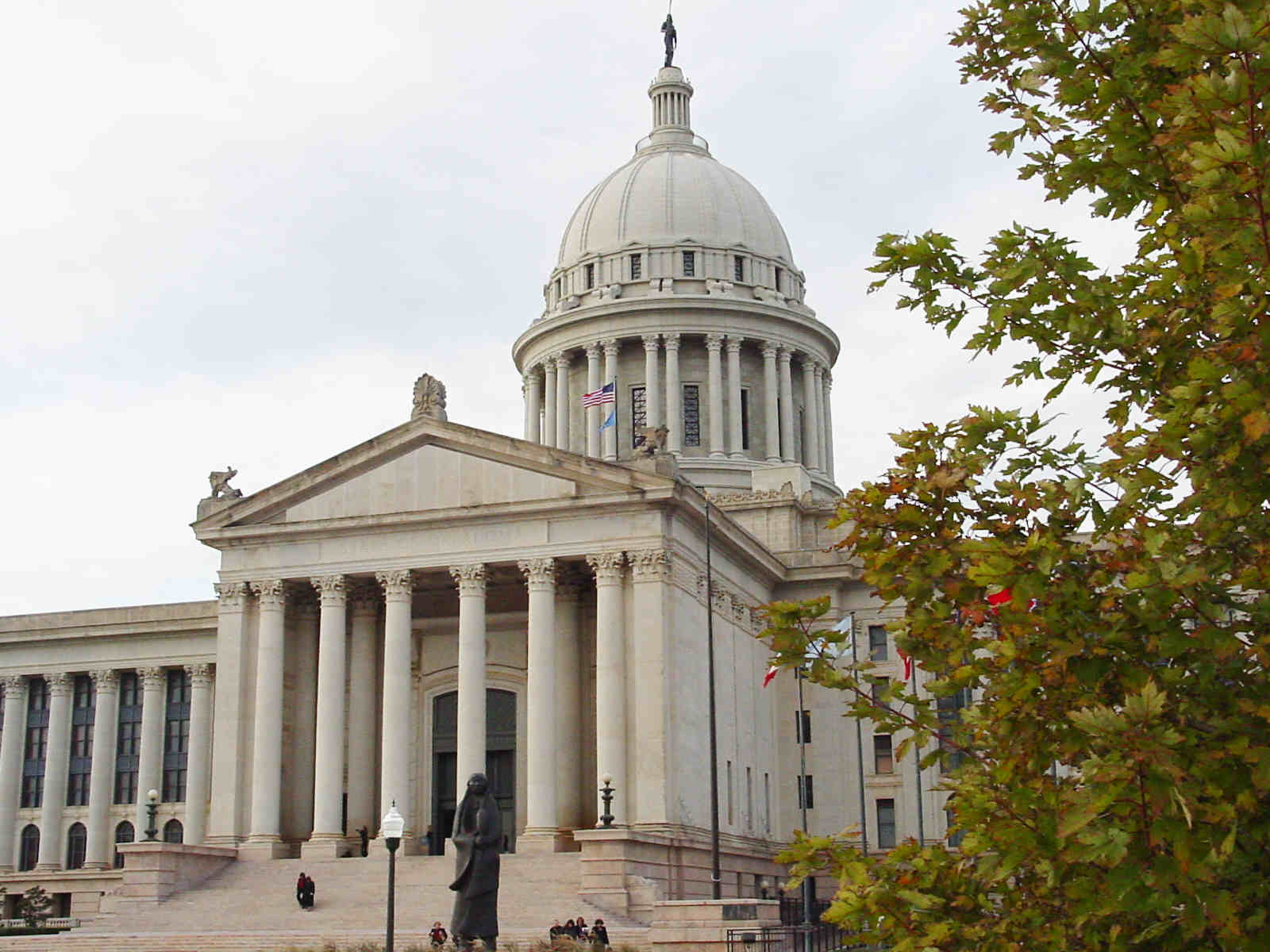
Shannon said House Bill 1438 is only a starting point. "Building a comprehensive inventory is just the first step in this process," Shannon said. "Now we have to streamline asset management, prioritize facilities based on their value to core functions, and liquidate those that have outlived their usefulness. Agency resistance to these common-sense management practices will not be tolerated." Shannon said he plans to file legislation requiring that proceeds from the sale of state property be placed in a public endowment to pay for the state's deferred maintenance needs. "To cite just one example, the Oklahoma Capitol -- our symbol of democracy -- requires $132 million in repairs," Shannon said. "It is both prudent and necessary to use money generated by the sale of underutilized properties to pay for the upkeep of the facilities that remain vital."
GOVERNMENT REFORM PROPOSALS
In January, House Republican leaders unveiled another round of policy proposals designed to make government more efficient and fiscally stable. Next session, Rep. Jason Murphey (R-Guthrie) and other House Republicans will carry a series of government modernization proposals to continue consolidating and improving duplicative or ineffective state services, while Rep. Randy McDaniel (R-Oklahoma City) will carry proposals to continue reforming the state's fiscally unstable pension systems. "Government efficiency is now the rule rather than the exception," said House Speaker Kris Steele (R-Shawnee).
Murphey, chairman of the House Government Modernization Committee, noted that legislators "cleared the deck" in 2011 by passing more than 20 pieces of government modernization legislation that were later signed into law by Gov. Mary Fallin. Murphey named several House Republicans who will carry government modernization legislation next session: Rep. David Derby (R-Owasso) will carry legislation consolidating the state's fiber network to include OneNet; Rep. David Brumbaugh (R-Broken Arrow) will carry legislation on purchasing, education spending transparency and fleet reform; Rep. Elise Hall (R-Oklahoma City) will carry legislation improving transparency into the state's bond indebtedness; Rep. Josh Cockroft (R-Tecumseh) will carry legislation creating a one-stop-shop for open records requests through the office of Chief Information Officer Alex Pettit; Rep. Aaron Stiles (R-Norman) will carry legislation building on his business licensing one-stop-shop legislation from last year; Rep. Lewis Moore (R-Arcadia) will carry legislation to reform the way the state manages state agency workers' compensation spending; and state House Speaker-designate T.W. Shannon (R-Lawton) will carry legislation requiring reforms to the management of state assets. Murphey will carry two bills focusing on purchasing reforms and transparency.
McDaniel, chairman of the House Pension Oversight Committee, noted that while last year's pension reforms shaved more than $5 billion off the state's unfunded liability, more needs to be done to further stabilize the state's pension systems. "The goal is to put all our systems on a sustainable path, which would be a notable accomplishment for public workers and taxpayers alike," McDaniel said.
Speaker Steele will carry a follow-up to House Bill 2140, last year's government agency consolidation bill. The follow-up bill, HB 3053, would consolidate the Merit Protection Commission and State Bond Advisor into the Office of State Finance and rename OSF the Office of Enterprise and Management Services. HB 3053 would also consolidate the Oklahoma State and Education Employees Group Insurance Board and Employment Benefits Council Board into the Oklahoma Health and Wellness Board. Steele noted that as a package, the government modernization legislation of the two-year 53rd Legislative Session is expected to generate hundreds of millions of dollars in savings.


Latest Commentary
Thursday 30th of April 2026
Thursday 30th of April 2026
Thursday 30th of April 2026
Thursday 30th of April 2026
Thursday 30th of April 2026
Thursday 30th of April 2026
Thursday 30th of April 2026
Thursday 30th of April 2026
Thursday 30th of April 2026
Thursday 30th of April 2026
Thursday 30th of April 2026
Thursday 30th of April 2026
Thursday 30th of April 2026